
What Waiting Until January Actually Costs You
Skip the fall check and the bill usually comes due at the worst possible moment: a snapped spring on the morning of a nor'easter, a door that won't budge because the track iced over, or an opener that strains and burns out trying to lift a door that's gotten heavier with age. None of that is cheap to fix in an emergency, and none of it is fun to deal with when it's 20 degrees out and you're late for work. An hour of prep now is a lot less painful than a stuck door during the first big snow.
Check the Weather Seal Before the First Freeze
The rubber seal along the bottom of the door and the weatherstripping around the sides do more work than people realize. Over a humid summer, that rubber softens and can crack or pull away from the track. Once temperatures drop and that seal is compromised, cold air, salt spray from plows, and meltwater all find their way in.
- Run your hand along the bottom seal and side stripping, feeling for brittleness, gaps, or flattened spots.
- Replace sections that no longer sit flush against the frame or garage floor.
- Check that the door closes fully flat against the seal instead of leaving a visible gap on one side, which often means the track needs adjustment.
Lubricate Before the Freeze-Thaw Cycle Starts
This is the single most skippable step and the one that causes the most winter service calls. Rollers, hinges, and the track itself need a fresh coat of garage-door-specific lubricant (not WD-40, which washes away and doesn't hold up in cold) before the freeze-thaw cycle sets in. Once ice forms and melts repeatedly on unlubricated metal, you get grinding, sticking, and rollers that bind in the track.
- Lubricate hinges, rollers, and the track with a silicone or lithium-based garage door lubricant.
- Wipe down the track first to remove summer dust and grit before applying anything new.
- Do this in fall and again partway through winter if you're getting regular freeze-thaw swings.
Springs Don't Like the Cold
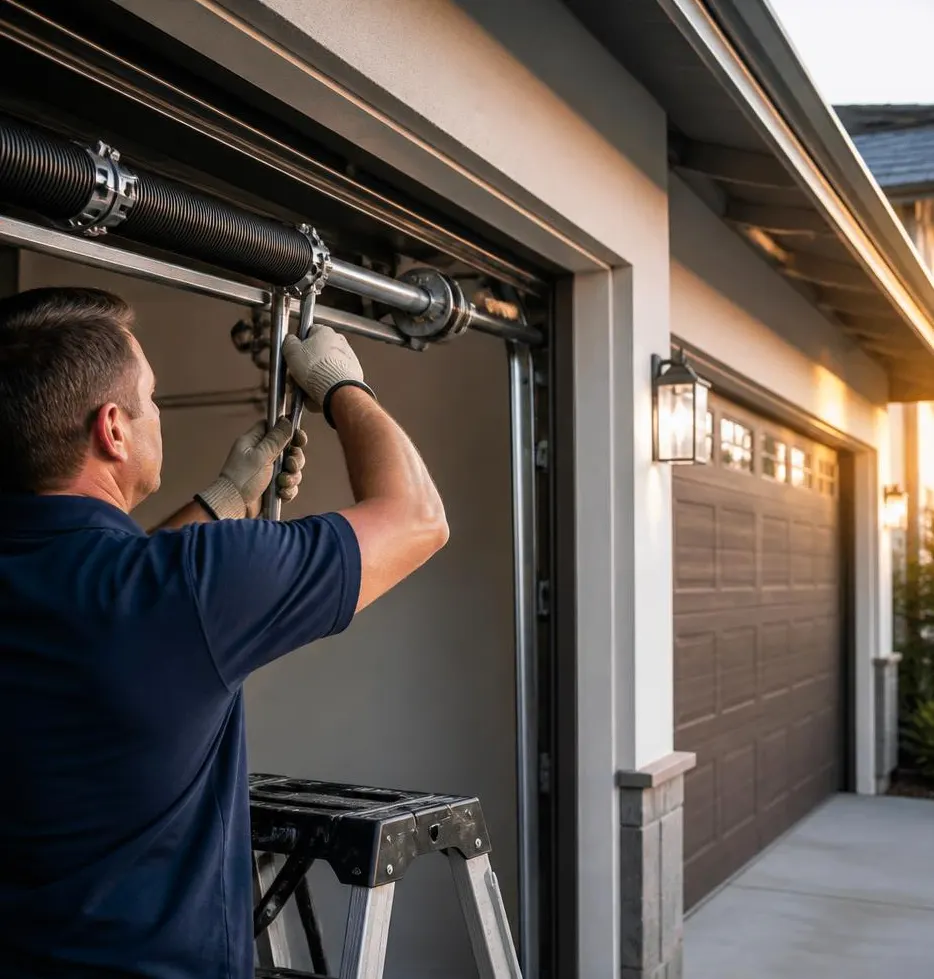
Torsion and extension springs are under constant tension, and cold metal is more brittle than warm metal. A spring that's been slowly wearing out all year is far more likely to snap on a freezing morning than a mild one. If your door has felt heavier than usual when opened manually, or if you've noticed it jerking or hesitating partway through its cycle, that's a sign the spring is already compensating poorly.
Don't attempt to adjust or replace a spring yourself. These are high-tension components, and the way they fail is sudden and genuinely dangerous. If you suspect a spring issue, this is a job for spring replacement, not a DIY afternoon.
Give the Opener a Real Check
Garage door openers work harder in winter because cold components move slower and springs under stress put more load on the motor. Before the season turns, run through the basics:
- Test the auto-reverse safety feature by placing an object in the door's path and confirming it reverses on contact.
- Check the photo-eye sensors near the floor on each side of the track; these commonly fail here from road salt and slush kicked up by plows and tires.
- Replace the backup battery if your opener has one, since cold weather drains battery performance faster.
- Listen for new grinding or straining sounds, which often mean the opener is compensating for a door that isn't balanced correctly.
Think About Your Door's Age and Insulation
A lot of the housing stock around here still has original garage doors, some of which were never insulated for the kind of humid summer-to-icy-winter swing this area gets. An uninsulated steel door conducts cold directly into an attached garage, which affects anything stored there and can make the space next to it colder too. If you're noticing frost forming on the inside of the door panels or a garage that never seems to warm up even with the heat on, that's a sign the door itself is the weak point, not just the weatherstripping around it.
Clear the Track and Check for Rust
Road salt tracked in on tires and boots, combined with repeated freeze-thaw moisture, is hard on exposed metal track and hardware. Before winter sets in:
- Clean visible salt residue and grit off the track and hinges.
- Check for surface rust starting on hinges, the track, or exposed bolts, and address it before it spreads.
- Make sure the track is securely fastened to the wall brackets; cold contraction can loosen hardware that was already slightly off.
When to Call Westwood Garage Door
If you've gone through this checklist and the door still feels heavy, sticks partway through its cycle, or you can hear a spring creak under load, that's not something to wait out until it fails completely. Westwood Garage Door handles spring replacement and garage door maintenance for homes throughout the area, and either service is far better scheduled proactively than as an emergency repair during a snowstorm. A maintenance visit covers the lubrication, balance check, and hardware inspection described above, done right, with the right materials for this climate, so you're not troubleshooting it yourself on a freezing morning.
If you're in Westwood, Park Ridge, Hillsdale, Woodcliff Lake, Emerson, Township of Washington, River Vale, or Oradell and want your garage door actually ready for winter instead of hoping it holds up, give Westwood Garage Door a call. We show up when we say we will.